
Why we built Cortena: 400 conversations, one pattern, and the problem everyone accepted as normal
Before writing a line of code, we had 400+ conversations with CFOs and controllers across Europe. Here's what we heard, what we abandoned, and why Cortena exists today.
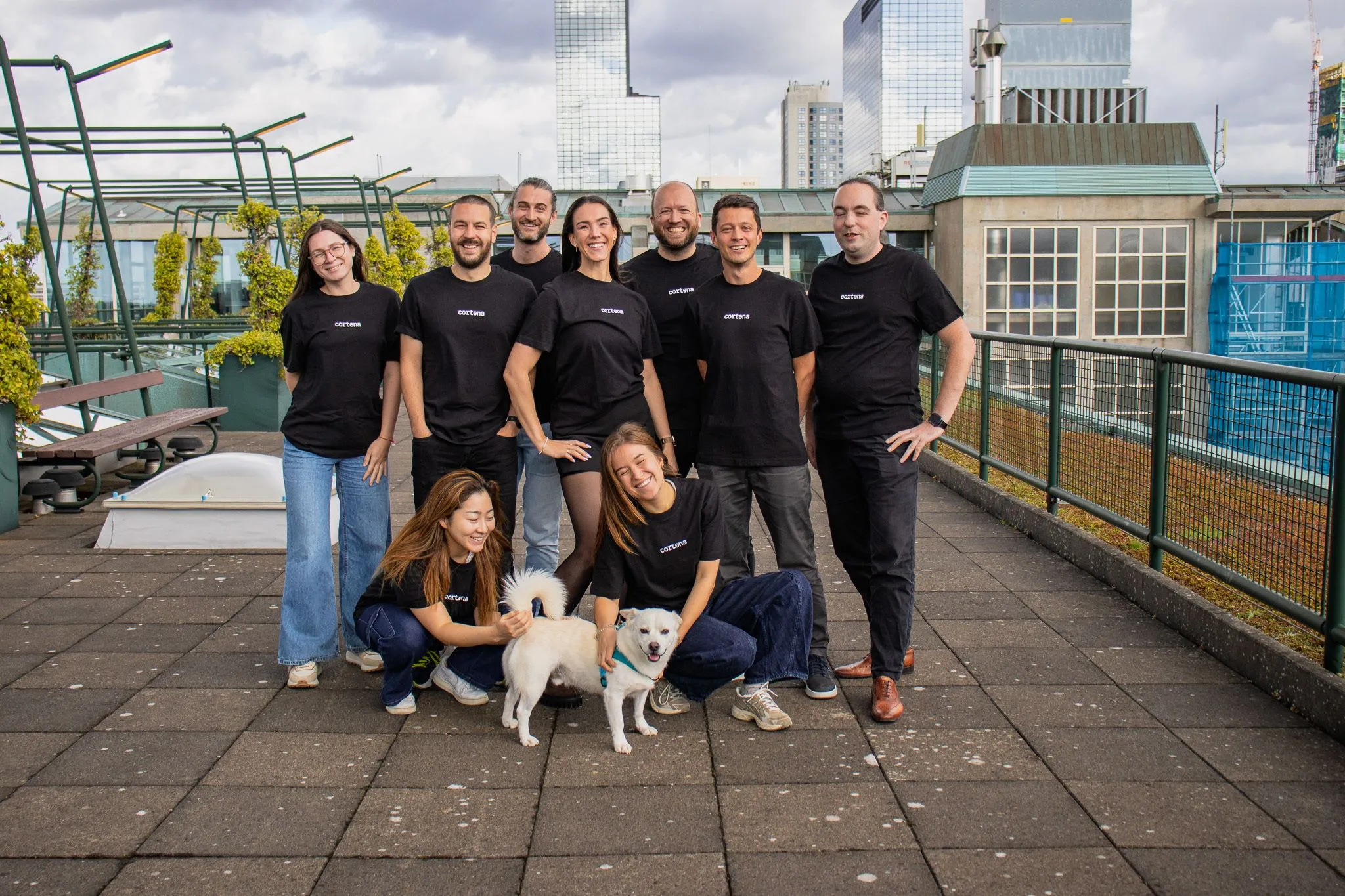
TL;DR: Before we wrote a line of code, we spent a year talking to 400+ CFOs, controllers, and finance leads across Europe. The same pattern surfaced in almost every conversation: finance teams losing roughly 20 minutes per invoice across 500+ invoices a month, €40,000+ of annual time drain per team, on pre-accounting work the industry had quietly accepted as normal. We set out to build an AI-native FP&A platform. We ended up building something different. This is why, told from inside.
A CFO at a mid-market European company described her month-end to us like this:
"Every invoice costs me 20 minutes. I process around 500 a month. You do the math."
We did. That's over 160 hours a year on a single workflow that, if you ask anyone in the industry, isn't the "real" finance work. It's the pre-work before the finance work. It's the unglamorous layer nobody pitches a product around.
We heard it again and again. Worded differently every time. Same pattern.
What 400 conversations kept surfacing
Across 400+ conversations with finance leaders at European SMEs and scale-ups, one frustration kept showing up regardless of ERP, size, or country: pre-accounting, the messy work of coding invoices, resolving exceptions, chasing context, and preparing clean inputs for the ledger, was consuming finance teams' hours and nobody had solved it.
The 20-minute-per-invoice number wasn't an outlier. It was the median. In team after team (DATEV users in Germany, Exact Online users in the Netherlands, Twinfield shops across Benelux), finance staff were spending the majority of their operational hours on work that:
- Followed repeatable logic
- Was high-volume (hundreds to thousands of invoices a month)
- Broke constantly on edge cases
- And was almost always done by hand
Multiply that out: 20 minutes × 500 invoices = 166 hours per month. At fully-loaded European finance-team rates, that's easily €40,000+ per year of direct time drain, per team. Before you count the downstream cost of bad data, late month-ends, and your best people stuck doing clerical work instead of strategy.
Our original plan was to build on top of this chaos. We couldn't.
What we were going to build (and why we didn't)
We started out building an AI-native FP&A platform: strategic foresight for lean finance teams, plain-language answers to variance questions, tighter forecasts, board-ready narrative on demand. Valuable work. But we kept hitting the same wall: you can't give finance teams strategic clarity when they're buried in operational chaos. Pre-accounting is where finance breaks first.
Every finance leader we talked to wanted the strategic layer, in principle. What they actually needed was for someone to take the plumbing off their team's plate first. Because strategy doesn't matter when you can't close the books.
So we stopped building the dashboard. We rebuilt around where the real hours go.
Why agents, not dashboards
We chose agent-based reasoning over another analytics layer because pre-accounting isn't a visualisation problem, it's an execution problem. Agents that understand context, follow instructions like a trained analyst, and produce traceable outputs are what actually replace manual work. Dashboards just describe the problem in higher resolution.
When our agents train on a company's real books, they reach roughly 90% automation within 7 days. That isn't a demo number. It's what happens when you stop trying to predict every edge case in a rules engine and instead build specialised agents that can reason about context, the way a senior controller does, minus the hours.
The other 10%? Surfaced as traceable exceptions with the agent's reasoning attached. So a human can resolve in seconds, not reconstruct the decision from scratch. Read more on why most finance AI breaks on real data.
How we could afford a year of listening
We had the benefit of building Cortena inside Builders Studio, whose operating principle, "we don't build before we understand the problem deeply enough to be dangerous," gave us both the runway and the discipline to spend a full year in the field before we shipped a line of code. Most early-stage founders can't afford that pace. We could, and we did.
Bruno ran most of the conversations personally. Not a research agency. Not a survey. Not a form on a landing page. Four hundred actual calls with actual finance leaders, listening more than talking, asking "what took too long this month" and shutting up.
By the time we built anything, we knew what we were building and why. That's the only reason Cortena's first shipped product, pre-accounting automation for DATEV, worked on real books instead of only on demo data.
The signal that told us we were right
Midway through the build, we closed a Rabobank Innovation Loan on the strength of the research and the architecture.
Rabobank doesn't hand those out on pitch decks. They evaluate the substance. For a product selling into Dutch and German SME finance teams, getting that loan from a bank of Rabobank's standing was an independent validation that we weren't separate from our buyers' world. We were in it.
That was the moment we stopped second-guessing whether the pivot was right. Finance teams were recognising themselves in what we'd built. A major European bank was willing to back the approach. The signal was loud.
Since then: paying clients live in Germany, DATEV pre-accounting agent in production, Exact Online rolling out in the Netherlands, Twinfield live, and as of March 2026, reconciliation against live bank data across 1,000+ European banks via our Yapily integration. Read how AI invoice reconciliation closes the loop with live bank data.
What we're committing to
Cortena is a multi-year build, not a quick SaaS exit. We're building the execution layer European finance teams have been missing. Starting upstream with pre-accounting, extending outward through reconciliation, spend management, and receivables, and eventually getting back to the strategic clarity we originally set out to deliver. Except this time, with the operational layer actually clean underneath it.
The multi-year framing matters because finance doesn't reward shortcuts. The tools finance teams trust today were built by teams that stuck around. We're signing up for that.
If you're a DATEV, Exact Online, or Twinfield user and you recognise your team in anything above, talk to us. We're actively onboarding new clients in Germany and the Netherlands.
FAQ
Who is behind Cortena?
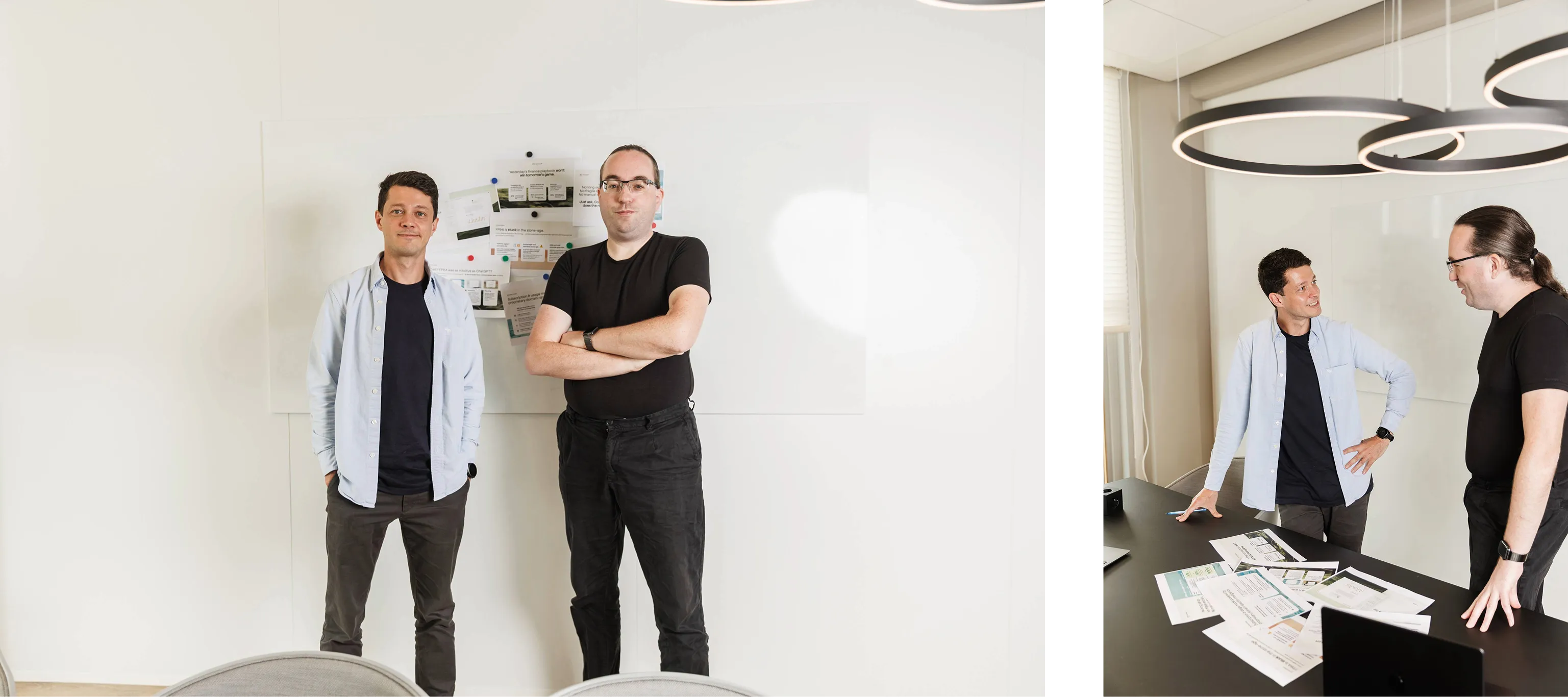
Cortena is built by Bruno and Seb, both former finance operators. Before writing code, Bruno personally ran 400+ discovery conversations with European CFOs, controllers, and finance leads. Cortena is a Builders Studio venture and is backed by a Rabobank Innovation Loan.
Why did Cortena pivot from FP&A to pre-accounting?
Because you can't give finance teams strategic clarity when they're buried in operational chaos. Our year in the field made clear that pre-accounting (invoice coding, reconciliation, exception handling) is where finance actually breaks. We had to fix the plumbing before we could layer on the strategic work.
What does Cortena do today?
Cortena runs pre-accounting automation for DATEV, Exact Online, and Twinfield, with live bank reconciliation across 1,000+ European banks via Yapily. We process over 5,000 invoices a month across clients at close to 90% accuracy, and we're rolling out Workflow Builder, spend management integration, and receivables automation next.
How fast does Cortena show results?
Cortena's agents typically reach around 90% automation on a company's real books within 7 days of training. The remaining 10% surfaces as traceable exceptions with the agent's reasoning attached, so humans resolve in seconds instead of reconstructing decisions from scratch.
Where can I try Cortena?
Cortena is onboarding teams in Germany and the Netherlands, particularly those using DATEV, Exact Online, or Twinfield. Visit cortena.ai or try the app at app.cortena.ai.
Bruno & Seb, co-founders, Cortena






.svg)

